First full funtionality finishing car
The ER25 was built to achive a goal that has exsited since the beginning of our organization: finishing every dynamic event at competition with full functionality intact. While out previous cars had shown potential, this specific milestone had never been reached. Building on the ER24 platform, the season was focused on finalizing a reliable vechicle while targeting a 10% weight reduction.
To ensure a stable foundation, we retained the 600V battery pack and the Emrax 228 High Voltage motor, which provides 110 hp at peak. A primary mechanical focus was the drivetrain; we redesigned the drive axle angles to eliminate the joint failures that had sidelined the ER24. Most of the technical progress this year was software-driven. We implemented a new accumulator DC controller for more precise power management. During testing, we identified drivetrain oscillations and vibrations, which were resolved by adjusting throttle actuator curves, differential settings, and motor maps.
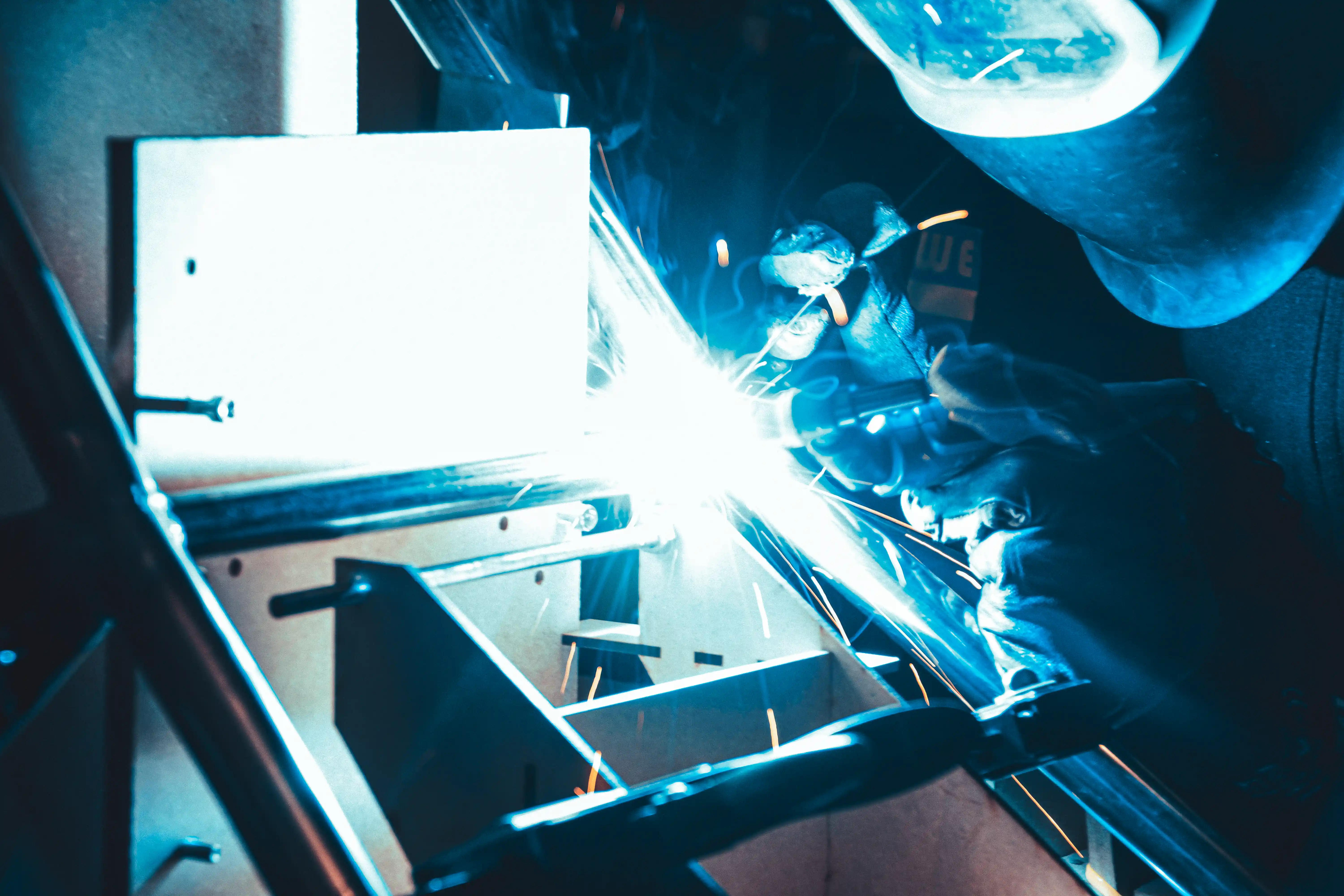
The production phase hit a major roadblock when the frame returned from painting and was found to be a few millimeters too small in the leg volume to meet regulations. This required the team to cut into the finished frame, re-weld the structure, and repaint it. Despite this delay, the team moved quickly into an extensive testing season. We logged miles at Mantorp Park, the Biltema parking lot, Sviestad—where we lost the front wing during a show run—and "Mexico." This track time was used to validate our software changes and provide driver training that hadn't been possible in previous years.
At Formula Student Netherlands (FSN), the ER25 weighed in at 239.5 kg, a 20 kg reduction from the ER24. We passed scrutineering early and officially became the first car in the organization’s history to finish all dynamic events with full functionality. This also marked our first-ever successful electric Endurance finish.
We then moved to FS Austria, where the car’s weight rose to 241.5 kg due to necessary on-site fixes. After replacing worn dampers and passing a lengthy technical inspection, we faced severe accumulator heat soak during the endurance event. With the battery safety shutoff set at 60°C, the pack reached 57°C in the final laps. This led to heavy thermal throttling, making it difficult to climb the track's inclines. To test the car's absolute limits, we used a "kill" map to maximize current draw and monitor SOC drain per lap. The ER25 held together and crossed the finish line, achieving back-to-back Endurance finishes and finally fulfilling the organization's long-standing goal.